
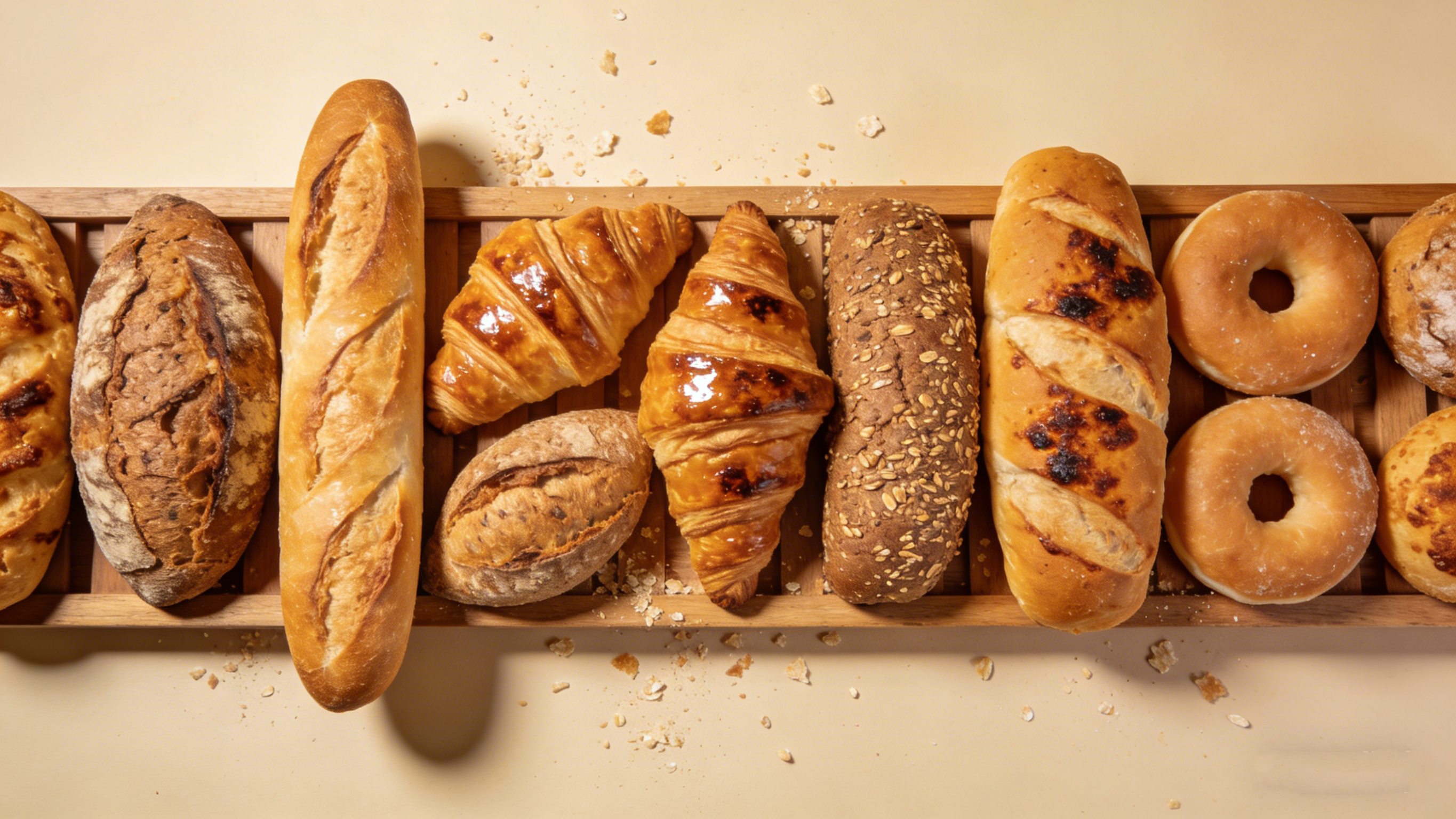
As global demand for baked goods continues to rise, large commercial bread machines have become essential equipment for central kitchens, industrial bakeries, chain brands, and food processing enterprises aiming for scalable production.
However, selecting the right industrial bread making machine is far more complex than simply comparing technical specifications. In practice, many procurement risks stem not from design parameters themselves, but from insufficient evaluation of critical operational details.
5 Key Questions Every Procurement Decision Must Address
1. Does the Capacity Truly Match Real Production Demand?
Capacity is often the first specification buyers focus on—and also the most frequently misunderstood.
It is crucial to distinguish between nominal capacity and stable output under continuous operation. A machine that performs well during short test runs may fail to deliver consistent output in real-world, high-load production environments.
In industrial bakery operations, the key question is not whether the machine can reach peak output, but whether it can maintain stable production rhythm during long, continuous runs without speed fluctuations, efficiency loss, or unplanned downtime.
Procurement teams should carefully verify:
Whether the rated capacity is based on continuous production, rather than short-term peak performance
Actual capacity differences across product types, such as toast bread, soft rolls, buns, or specialty breads
Whether performance degradation, speed reduction, or stoppages occur under sustained high-load conditions
A truly industrial-grade commercial bread machine must deliver stable throughput under high utilization, ensuring production planning remains reliable and predictable.
2. Are the Core Drive System and Structural Design Reliable?
Large commercial bread machines often operate 16–24 hours per day, making long-term mechanical reliability a critical factor in total cost of ownership.
The drive system and structural design directly influence equipment lifespan, maintenance frequency, and downtime risk. Machines with insufficient structural margins may appear cost-effective initially, but often generate escalating hidden costs during operation.
Key evaluation points include:
Whether the main drive system uses industrial-grade motors and gear reducers designed for continuous high-load operation
Whether the machine frame offers sufficient rigidity to prevent deformation over long-term use, which could affect transmission accuracy and product consistency
Whether critical moving components are designed for easy inspection, maintenance, and replacement, ideally using modular structures
Robust structural engineering significantly reduces failure rates and minimizes production losses caused by maintenance interruptions.
3. Does the Machine Support Multi-Product and Flexible Production?
As consumer demand shifts toward diversified bakery products, single-purpose machines are increasingly unable to support long-term business growth.
When evaluating a large commercial bread machine, buyers should assess its flexibility across multiple product categories and formulations.
Key considerations include:
Support for quick changeovers between different molds or key production parameters
Adaptability to various dough types, including high-hydration doughs, low-sugar recipes, and high-fat formulations
Whether the control system allows recipe storage and rapid recall, reducing reliance on operator experience
Machines designed for flexible production help bakeries respond faster to market changes, improve line utilization, and reduce the need for repeated equipment investment.
4. Are Food Safety and Hygienic Design Fully Addressed?
Food safety is non-negotiable in commercial baking operations. Equipment design plays a decisive role in ensuring long-term compliance and consistent product quality.
Procurement teams should confirm:
Whether food-contact components meet food-grade material standards
Whether the structure supports easy disassembly and cleaning, minimizing hygiene blind spots
Whether cleaning and maintenance procedures are efficient, reducing labor and downtime
Well-designed hygienic structures not only meet regulatory requirements but also contribute to consistent quality and brand reliability.
5. Does the Supplier Have Proven Industry Experience?
Large commercial bread machines are not generic products. Their performance depends heavily on practical baking process knowledge and application-specific experience.
Manufacturers with proven industry expertise are more likely to:
Optimize machine design and parameters for specific bread types
Anticipate operational and maintenance risks before delivery
Provide actionable technical guidance aligned with real production conditions
Documented industry applications and long-term customer cases are strong indicators of equipment reliability and supplier partnership value.
Henghao Machinery: Reliable Solutions for Scalable Industrial Baking
Henghao Machinery specializes in large commercial bread machines and automated bakery equipment for central kitchens and industrial-scale production.
By integrating robust structural design, industrial-grade core components, and system-level process optimization, Henghao Machinery helps bakery manufacturers achieve stable output, efficient operation, and sustainable long-term growth in competitive global markets.


 Address: No.2222 Zhencheng Road, Jiangyin City, Jiangsu Province, ChinaMobile phone: +86-183 2613 2669Email: Admin@wxhenghao.com
Wuxi Henghao Machinery Technology Co., Ltd.
Intelligent Manufacturing of Deliciousness, Always by Your Side.
From staple food machines to bakery and pastry production lines, we provide innovative equipment and customized automation to boost efficiency and quality.
Guided by "Constant Excellence," we aim to bring safe, delicious food to consumers while driving the intelligent transformation of the food industry.
Copyright © 2026 无锡恒好机械科技有限公司 Ltd. All Rights Reserved. POWERED BY WEIMOBTRADE
